Evidence-based guide · Updated August 2026
RSD in ADHD: What Rejection Sensitive Dysphoria Feels Like and How to Cope
A flash of criticism lands and suddenly your chest is tight, your face is hot, and your brain is replaying the moment on a loop. If that reaction feels wildly out of proportion to what actually happened, it has a name: rejection sensitive dysphoria. Here is what it is, why it clusters with ADHD, and what to do the next time it hits.
Skip ahead: build your own coping menu now →
Table of Contents +
🎯 Quick Summary (TL;DR)
- What it is: Intense emotional pain triggered by real or perceived rejection or criticism (a term clinician Dr. William Dodson coined for a pattern he observed in ADHD patients)
- Is it official? Not a DSM-5 diagnosis, but the broader category it falls under, emotional dysregulation, affects an estimated 34 to 70% of adults with ADHD (PLOS One, 2023)
- Why it hurts physically: Social rejection activates brain regions tied to physical pain, which is part of why the reaction can feel disproportionate
- What helps: Medication (alpha-agonists, stimulants), therapy focused on emotional regulation, and pre-planned self-soothing routines you build before you need them
What Is Rejection Sensitive Dysphoria?
Rejection sensitive dysphoria, usually shortened to RSD, is intense emotional pain triggered by real or perceived rejection, criticism, or a sense of falling short of expectations. The term was coined by Dr. William Dodson, a psychiatrist who specializes in ADHD, to describe a pattern he observed almost universally among the ADHD patients he treats.
That last detail matters: RSD is a clinical description, not a formal diagnosis. It does not appear in the DSM-5, and according to the Cleveland Clinic, it is not an officially recognized medical condition and has limited dedicated research behind it. What clinicians and researchers have documented extensively is the broader category RSD sits inside: emotional dysregulation as a core feature of ADHD.
That distinction is not a reason to dismiss the experience. It's a reason to be precise about what you're describing when you use the term, especially if you bring it up with a prescriber or therapist. "I have RSD" is a shorthand; "I have intense, disproportionate emotional reactions to perceived rejection, and I think it's connected to my ADHD" is the version a clinician can actually work with.
What separates RSD from ordinary sensitivity to criticism is intensity and speed. Most people feel a sting when criticized and move on within minutes. With RSD, the reaction can arrive almost instantly, feel overwhelming, and take hours to fully settle, even when the trigger was minor or entirely imagined.
Dodson has described RSD as showing up in two directions. The first is outward and visible: sudden anger, a defensive snap, or walking out of a conversation. The second is inward and easy to miss from the outside: a wave of shame, a conviction that you've permanently damaged a relationship over something small, or a flood of self-criticism that can feel disproportionate even to the person having it. Both are the same underlying reaction, just aimed in different directions. Neither is a character flaw or a choice, and neither responds well to being told to "just calm down," because the reaction is already happening faster than conscious control can intervene.
How RSD Shows Up: Signs and Symptoms
RSD doesn't stay in your head. People who experience it commonly describe a mix of physical sensations, behavioral patterns, and anticipatory anxiety that builds before rejection even happens.
Physical sensations
Chest tightness, a hot face, nausea, or a feeling of being physically "struck" the moment criticism or rejection registers.
Behavioral patterns
People-pleasing, perfectionism, and quietly avoiding projects or relationships where failure or judgment feels possible.
Anticipatory anxiety
Fear of a rejection that hasn't happened yet, often worse than the rejection itself once it actually arrives.
The trigger itself is often small enough that it's easy to feel embarrassed about the reaction afterward. A manager's neutral-toned Slack message. A friend who takes three hours to reply to a text. A joke at your expense that everyone else laughed off. None of these require an actual rejection to occur. The anticipation of possible rejection, or an ambiguous signal that could be read as rejection, is often enough to trigger the full response. That's part of why RSD is exhausting to live with: the threat doesn't have to be real to feel real.
This pattern isn't limited to adults. A 2024 qualitative study on the lived experience of rejection sensitivity in ADHD found the phenomenon commonly reported across ages, with some differences in how it's described between men and women (medRxiv/PMC, 2024). If a child in your life shows sudden, outsized emotional reactions to correction or perceived exclusion, it's worth reading our guide to RSD in kids with ADHD, which covers how the same pattern looks in a classroom or at home. RSD-style reactions also feed directly into masking, since the fear of triggering one is often enough to make someone hide symptoms in the first place; our guide to ADHD symptoms in women covers that connection in more depth.
Is RSD Connected to ADHD, and Why?
RSD clusters heavily with ADHD, but that doesn't mean it's exclusive to ADHD by definition. It means people with ADHD, across every presentation, including inattentive ADHD, report it at strikingly high rates, and researchers think shared emotional-regulation and dopamine-signaling differences explain why, though that link is more nuanced than the popular "low dopamine" shorthand suggests.
Dr. Russell Barkley's influential framework positions deficient emotional self-regulation as a core component of ADHD, standing alongside the more commonly discussed behavioral and cognitive self-regulation deficits. In other words: the same neurological differences that make it hard to start a task or sit still also make it harder to regulate the intensity of an emotional reaction once it starts.
Source: Evidence of emotion dysregulation as a core symptom of adult ADHD: A systematic review, PLOS One, 2023. Ranges reflect variation across the studies included in the review.
An estimated 34 to 70% of adults with ADHD show clinically significant emotional dysregulation, compared with an estimated 24 to 50% of children with ADHD, according to a 2023 systematic review published in PLOS One. Those are wide ranges, which reflects real variation across the underlying studies, not sloppiness. What's consistent across the research is the direction: emotional dysregulation is common in ADHD at every age, not a rare complication.
Where does Dodson's clinical observation fit into that picture? It's worth separating clearly: Dodson's estimate that RSD is near-universal among his ADHD patients is a clinical impression from his own practice, not an epidemiological finding. It's a useful signal that clinicians who specialize in ADHD see this pattern constantly, but it shouldn't be repeated as a study-backed prevalence statistic. (You'll see figures like "70 to 90%" or "99%" on lower-tier sites; those trace back to Dodson's clinical impression, not a study, and we're not repeating them here as facts.)
The Neuroscience: Why Rejection Can Feel Like Physical Pain
If RSD feels physical, that's not just a figure of speech. Social rejection activates brain regions that overlap with the ones that process physical pain, and that overlap appears intensified under ADHD's threat-processing patterns.
In a now-foundational fMRI study, Naomi Eisenberger and colleagues found that social exclusion activates the dorsal anterior cingulate cortex (dACC), a brain region linked to the unpleasantness component of physical pain, along with the anterior insula (Eisenberger, Lieberman & Williams, Science, 2003). Follow-up neuroimaging work has continued to build on that finding. The upshot: your brain doesn't have a fully separate system for "social pain" and "physical pain." They share real estate.
For someone with ADHD, that shared circuitry gets more traffic. Repeated interpersonal friction, missed social cues, forgotten commitments, being told "you're not trying hard enough" is a common ADHD experience, and each instance can compound the threat-processing pattern this circuitry is built for. Over years, the brain gets efficient at flagging even minor, ambiguous social signals as a potential threat, which is one plausible reason RSD reactions can fire on something as small as a flat-toned text message.
There's also a dopamine-signaling angle. ADHD brains regulate dopamine differently, and dopamine isn't just about reward, it also plays a role in how the brain weighs the emotional significance of an event. A dysregulated dopamine system doesn't just make positive rewards feel more urgent; it can also make a negative social signal register with more force than it would in a neurotypical brain. Combine that with weaker top-down regulation from the prefrontal cortex, the same region responsible for executive function more broadly, and you get a reaction that arrives fast, hits hard, and is genuinely difficult to consciously downshift once it starts.
Rejection Sensitive Dysphoria vs. Similar Experiences
RSD gets confused with a few adjacent experiences, and the mix-up matters because the right next step, whether that's ADHD-focused emotional-regulation therapy or a different kind of treatment, depends on getting the pattern right.
- Social anxiety disorder: Centers on ongoing fear of judgment in social situations generally, and tends to build gradually. RSD is more often a sudden, intense spike tied to a specific rejection or criticism, followed by a comparatively fast (though still painful) resolution.
- General rejection sensitivity: A personality trait that exists on a spectrum in the general population. What distinguishes the RSD pattern discussed here is its consistent pairing with ADHD's broader emotional dysregulation profile, not just heightened sensitivity in isolation.
- BPD-related emotional reactivity: Borderline personality disorder involves emotional reactivity tied to fear of abandonment, often with more sustained mood instability and relationship patterns. RSD-style reactions in ADHD tend to be sharper and shorter, without the broader diagnostic picture BPD requires.
None of this is a self-diagnosis tool. If the intensity or duration of your reactions is affecting your relationships, work, or daily functioning, a clinician who understands ADHD's emotional-regulation profile is better positioned to sort out which pattern actually fits than any article, this one included.
How to Cope with RSD: What Actually Helps
There's no cure for RSD, because it isn't a standalone diagnosable condition in the first place. According to the Cleveland Clinic, the realistic clinical target is emotional regulation, not elimination. With that framing, three categories come up repeatedly across clinical sources: medication, therapy, and behavioral-preventive strategies.
Three category types referenced across clinical sources on RSD (Cleveland Clinic; ADDitude). Even split shown for categorization only, not a proportional research finding.
💊 Medication
Some clinicians report response to alpha-agonists, stimulants, or MAOIs. This varies by individual and requires a prescriber's guidance. This is informational only, not a recommendation to self-medicate.
🗣️ Therapy
Approaches focused specifically on emotional regulation, such as DBT-informed skills work or ADHD-specialized CBT, address the underlying dysregulation pattern rather than just the triggering thoughts. General talk therapy that never touches emotional regulation directly tends to help less.
🛟 Behavioral-preventive
Pre-planned self-soothing routines you can start today, with zero appointment needed. This is the one category you control entirely on your own timeline.
That third category is where most people can actually start. Medication needs a prescriber. Therapy needs an appointment, often a waitlist. A pre-planned routine needs about ten minutes right now, before you're in the middle of a spiral and your executive function is the least available it will ever be.
The reason a pre-planned routine works better than deciding in the moment comes down to timing. The moment RSD fires is the worst possible moment to ask your brain to generate a thoughtful plan, because the same executive function you'd need for that is temporarily overwhelmed by the reaction itself. A routine you built while calm sidesteps that problem entirely: it doesn't ask you to think clearly during the spiral, only to follow a decision you already made.
A Free Tool for the Pre-Planned Routine Strategy
The hardest part of a pre-planned routine isn't having good intentions. It's building the plan before you're already spiraling. Once RSD hits, the executive function you'd need to calmly brainstorm a healthy alternative is exactly what's offline.
RSD spirals also tend to feed a dopamine-seeking loop: the emotional crash creates a pull toward whatever fast, low-effort reward is nearest, usually a phone, the same reward-chasing pattern behind ADHD hyperfixation. Therapists already recommend "have a plan before you need it" for exactly this kind of moment, the same pattern behind pre-planned relapse-prevention routines. DopMenu applies that same idea specifically to RSD spirals.
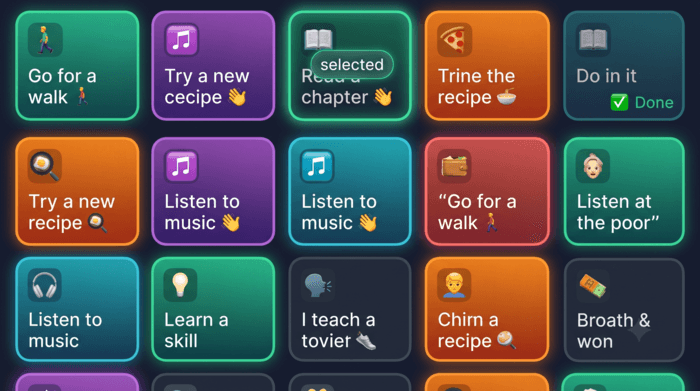
How it works:
- Build a menu of dopamine-friendly activities sorted by time commitment, from 2-minute resets to 30-minute options, while you're calm and can think clearly.
- When RSD hits, you're not brainstorming from zero. You're picking from a list you already trust.
- No signup, no account, and no data leaving your device, the same friction-free approach behind all 8 of our free ADHD focus tools.
The Takeaway
Rejection sensitive dysphoria isn't in the DSM-5, but the intense, disproportionate reaction it describes is real, and it clusters with ADHD for reasons that are starting to make neurological sense: shared emotional-regulation deficits, dopamine-signaling differences, and a threat-detection system that treats social rejection like physical pain. None of that makes it weakness, and none of it means you're overreacting on purpose.
Coping with RSD isn't about fixing the reaction in the moment, because by the time it hits, the part of your brain that could calmly manage it is already offline. It's about having a plan ready before the spiral starts. Build your own dopamine menu today, while you're calm, so the next time RSD hits, you already know exactly where to go. This is one piece of a bigger toolkit: our guide to ADHD coping tools and strategies maps every free tool to the daily challenge it solves.
Frequently Asked Questions
Is rejection sensitive dysphoria a real diagnosis?
No. RSD is not listed in the DSM-5. It's a clinical description coined by Dr. William Dodson to name a pattern he observed in patients. The broader phenomenon it describes, emotional dysregulation, is well-documented in ADHD research, but RSD itself has limited dedicated research (Cleveland Clinic).
What triggers rejection sensitive dysphoria?
Real or perceived rejection, criticism, or a sense of falling short of your own or someone else's expectations. The trigger doesn't have to be objectively serious. A delayed text reply or a neutral-toned email can set it off just as easily as direct criticism (Cleveland Clinic).
Does everyone with ADHD have RSD?
There's no firm consensus. Dr. Dodson's clinical estimates suggest it's common among the ADHD patients he treats, but rigorous prevalence research specifically on RSD, as opposed to emotional dysregulation broadly, is still limited (Cleveland Clinic; medRxiv qualitative study, 2024).
Can medication help with RSD?
Some clinicians report that patients respond to alpha-agonists, stimulants, or MAOIs, but response varies by individual and requires a prescriber's guidance. This article is informational only, not medical advice.
What can I do right now when RSD hits?
Grounding techniques, a pre-built comfort or activity plan, and movement are commonly cited immediate steps. Longer-term, therapy focused on emotional regulation is the more durable approach, but having a plan ready before the spiral starts is the one thing you can act on today.
What is the connection between ADHD and RSD?
RSD stands for rejection sensitive dysphoria, an intense emotional reaction to real or perceived rejection or criticism. It is not a formal diagnosis, but it is widely described alongside ADHD, which is why people search for 'ADHD and RSD' or 'rejection sensitivity in ADHD'. Not everyone with ADHD experiences it.
Build Your Comfort Plan Before You Need It
DopMenu is free, private, and works instantly in your browser. No signup, no email, no data leaving your device. Build a ready-made list of dopamine-friendly activities now, so you have somewhere to go the next time RSD hits.