Evidence-based guide · Updated October 2026
ADHD and Dopamine: What the Research Actually Shows
"ADHD is just low dopamine" is everywhere online. A board-certified psychiatrist writing in April 2026 called that claim simply not accurate. Here is what a major 2024 research review actually found, why the popular explanation misses the real picture, and what to do with that instead of chasing another dopamine hit.
Skip ahead: build a free dopamine menu now →
Table of Contents +
🎯 Quick Summary (TL;DR)
- The popular claim: "ADHD is just low dopamine" is the internet's favorite explanation, and it is not quite right
- What a major review found: a 2024 evaluation of the neuroimaging evidence found studies pointing both toward lower and higher dopamine activity in ADHD brains, with "limited evidence that reduced levels of the dopamine neurotransmitter per se is a defining feature of ADHD" (MacDonald et al., PMC, 2024)
- It's not just dopamine: a 2025 systematic review found altered serotonin markers in 81% of 95 studies on ADHD, and norepinephrine plays a major, separate role too
- Why the myth matters: framing ADHD as "chasing dopamine" pushes people toward unsupported fixes like dopamine detoxes instead of what the evidence actually backs
- What actually helps: pre-planning healthy, low-effort dopamine sources works better than trying to manage the urge once it's already firing
Is ADHD Really Caused by Low Dopamine?
Type "ADHD dopamine" into any social platform and the answer arrives instantly and confidently: ADHD brains are low on dopamine, so the fix is to find ways to raise it. It is a tidy explanation. It is also, according to the people who study this for a living, not accurate.
"The idea that ADHD is caused by 'low dopamine' is simply not accurate," writes Candida Fink, M.D., a board-certified child, adolescent, and general psychiatrist, in a Psychology Today piece published April 28, 2026. Her point is not that dopamine is irrelevant to ADHD, it clearly matters, but that the tidy "low dopamine" story skips past a body of research that is genuinely more mixed, and in some places contradictory.
That gap between the confident online explanation and the actual evidence shows up in how people search for answers, too, just not as a fading myth. Monthly U.S. search volume for the phrase "low dopamine and ADHD" held at 1,000 in August 2025, climbed to a plateau of 1,300 from December 2025 through June 2026, then settled back to 1,000 in July 2026, about where it started. Over that same window, the broader, less deficiency-framed phrase "ADHD and dopamine" eased slightly from 8,100 to 6,600 and has held there since September 2025. Neither figure proves anything on its own, search trends do not work that cleanly, but the deficiency-framed phrase holding steady rather than fading is a real, current signal that the myth is not going away just because it does not hold up.
Source: DataForSEO Labs, Google US monthly search volume for "low dopamine and adhd" (range: 1,000-1,300) and "adhd and dopamine" (range: 6,600-8,100), retrieved September 7, 2026.
What Dopamine Actually Does in the ADHD Brain
Before untangling what the "low dopamine" claim gets wrong, it helps to know what dopamine is actually doing. It is not simply a "feel good" chemical. Dopamine is central to the brain's reward and motivation circuitry, the system that decides how much effort a given task is worth and generates the anticipatory push to actually start it.
According to the ADDA (Attention Deficit Disorder Association), ADHD and dopamine differences are linked, and that link is part of why increasing dopamine availability, through medication or other means, can ease some symptoms for some people. The research into dopamine's role in ADHD is not new either. Interest in the connection dates back to the 1960s, when researchers first noticed that stimulant medications relieved ADHD symptoms, which is part of what originally pointed scientists toward dopamine as a likely mechanism (Nature, 2026).
Two specific mechanisms come up repeatedly in the research: how quickly dopamine gets reabsorbed after release, and how strongly the brain anticipates a reward before it arrives. Both help explain a pattern most people with ADHD recognize immediately: a task that should be simple feels disproportionately hard to start, while something genuinely novel or interesting becomes disproportionately hard to stop. That is not a motivation problem in the moral sense. It is a difference in how the reward system weighs "worth starting" before you have consciously decided anything.
What the Research Actually Shows (Not What Social Media Says)
This is where the popular explanation and the research diverge most clearly. A 2024 evaluation of the dopamine hypothesis for ADHD, published in PMC and cited by 146 subsequent papers as of September 2026, reviewed the PET and SPECT neuroimaging literature directly measuring dopamine activity in ADHD brains. The findings did not point in one clean direction.
Some studies found evidence consistent with lower extracellular dopamine, including increased dopamine transporter binding in the striatum. Other studies found the opposite pattern, evidence of higher extracellular dopamine in the same brain regions. Still others found no measurable difference between ADHD and control groups at all. Faced with that spread, the reviewers concluded there is "limited evidence that reduced levels of the DA neurotransmitter per se is a defining feature of ADHD" (MacDonald et al., PMC, 2024).
Dr. Fink's April 2026 piece makes the same point from a clinical angle: "ADHD is also associated with disruptions in pathways related to a second neurotransmitter, norepinephrine," and, just as pointedly, "impulsive, novelty-seeking, inattentive, and dysregulated behaviors are not because someone is 'chasing dopamine.'" Framing every ADHD behavior as dopamine-seeking is a catchy shorthand that the clinical evidence does not fully back.
Dopamine and norepinephrine are not the whole picture either. A 2025 systematic literature review examined 95 studies on ADHD neurobiology and found that 81% documented altered serotonin production, binding, transport, or degradation linked to ADHD or ADHD-like behaviors, implicating specific receptor subtypes and the serotonin transporter. The same review notes that FDA-approved ADHD medications already have direct or indirect effects on serotonin systems, and argues that future drug development should target multiple neurotransmitter systems at once, not dopamine alone (Faraone, Ward, Boucher, Elbekai & Brunner, Expert Opinion on Therapeutic Targets, 2025).
Source: Faraone, Ward, Boucher, Elbekai & Brunner, systematic review of 95 studies, Expert Opinion on Therapeutic Targets, 2025.
Put together, the honest summary is not "ADHD has normal dopamine" any more than it is "ADHD is low dopamine." It is that dopamine, norepinephrine, and serotonin all appear to function differently in ADHD brains, in ways researchers are still mapping, and no single neurotransmitter deficiency explains the condition on its own.
| Popular claim | What the evidence actually shows |
|---|---|
| "ADHD is caused by low dopamine" | Neuroimaging studies are split: some show lower dopamine activity, some show higher, some show no difference (MacDonald et al., 2024) |
| "People with ADHD are chasing dopamine" | Impulsive and novelty-seeking behavior is not fully explained by dopamine-seeking alone (Fink, 2026) |
| "Dopamine detoxes fix ADHD" | "Not a shred of evidence" supports this, per Fink's April 2026 review of the trend |
| "It's only about dopamine" | Norepinephrine plays a direct role, and 81% of 95 reviewed studies found altered serotonin markers too (Faraone et al., 2025) |
How This Shows Up Day to Day
The neuroscience is unsettled, but the day-to-day pattern it is trying to explain is extremely consistent, and most people with ADHD recognize it instantly: boring but necessary tasks feel almost physically hard to start, while something genuinely stimulating is hard to put down once it has your attention.
That pull toward stimulation is not random. A 2025 clinical survey of 50 adults with diagnosed ADHD found work tasks were the most commonly cited trigger for this kind of pull at 35%, followed by creative activities at 25% and gaming at 20% (Oroian, Nechita & Szalontay, European Psychiatry, 2025, discussed in more detail in our guide to ADHD hyperfixation). Notice that "work you were supposedly struggling to start" is on that list. Once something interesting enough grabs the reward system, whether it is the task itself or a distraction from it, disengaging takes active effort the ADHD brain is not well equipped to supply in the moment.
The same underlying pull shows up in less obvious places too: doomscrolling, impulse purchases, and the sharp emotional dip some people describe after a rejection or a setback. That last one is worth naming directly, because it runs on the same dopamine-linked reward circuitry discussed here. If sudden, intense emotional pain after criticism or rejection sounds familiar, rejection sensitive dysphoria is the more precise term for it, and it is worth reading about separately.
For some people this pull looks less like restlessness and more like drifting off mid-task, a pattern covered in our inattentive ADHD guide.
What Actually Helps
Because the mechanism is more complicated than "low dopamine," the most effective responses do not try to simply add more dopamine. Two levers show real support in the research: medication, which changes how available dopamine and norepinephrine are to the brain, and behavioral strategies, which change what triggers the seeking pattern in the first place.
On the medication side, stimulants such as methylphenidate and amphetamine-based medications are understood to work by blocking dopamine transporters or increasing dopamine release, keeping it available in the synapse longer to support focus. That is a general mechanism, not medical advice, and any decision about medication belongs in a conversation with a prescriber who knows your history, not a blog post.
On the behavioral side, the standard advice to simply "resist the urge" or "use more willpower" tends to fail for a specific reason: the same attentional pull that makes stimulation hard to resist also makes it hard to notice you are being pulled until you are already deep into it. What works more consistently is deciding in advance what you will reach for instead, before the urge fires, not during it. The same novelty pull explains why most ADHD apps get abandoned after the first week.
Dr. Fink's April 2026 piece is also worth quoting on what does not work: "there is not a shred of evidence" that popular "dopamine detox" routines, deliberately abstaining from stimulating activities to "reset" dopamine, actually help ADHD. If a strategy promises to fix dopamine levels through elimination alone, treat that as a signal to look for something with more evidence behind it, not less.
Parents often ask how this applies to children. Our guide to free ADHD focus tools for kids covers visual timers and other browser tools that make time and rewards easier to see.
A Free Tool: Build a Dopamine Menu Instead of Chasing the Next Hit
The idea of a "dopamine menu," a personal, pre-planned list of healthy, stimulating activities sorted by how much time and energy they take, has become a popular ADHD strategy in its own right, covered by outlets like ADDitude. The concept works precisely because it does not depend on getting the neuroscience exactly right. It removes the in-the-moment decision entirely, so when the pull toward doomscrolling or an impulse purchase hits, there is already a better option sitting one click away.
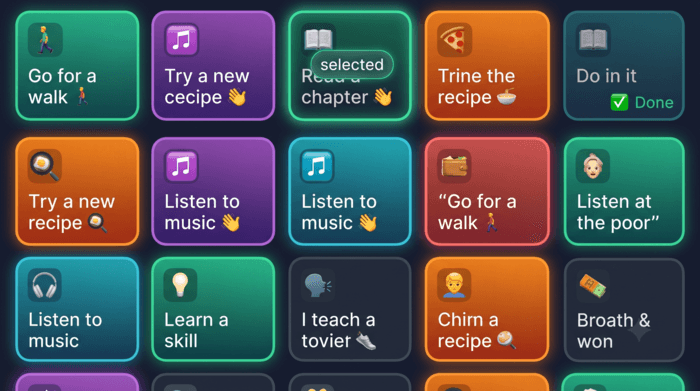
How it works:
- Build a personalized menu of healthy dopamine sources, sorted from quick two-minute bursts to longer 30-minute activities.
- When the urge to scroll or spend hits, open your menu instead of your phone's home screen, and pick whatever matches your current time and energy.
- No signup, no account, and no data leaving your device, the same friction-free approach behind all 8 of our free ADHD tools.
DopMenu will not change what is happening at the receptor level, no free browser tool can, but it directly targets the part of this pattern that behavioral research actually supports: removing the decision cost in the exact moment your reward system is already pulling you toward the easiest, most available hit. If impulse spending specifically is the shape this takes for you, a 48-hour cooldown timer works on the same underlying mechanism from a different angle.
The Takeaway
"ADHD is low dopamine" is a satisfying story, but it is not the one the research tells. A 2024 review of the neuroimaging evidence found studies pointing in multiple directions at once, and concluded there is limited support for a simple dopamine deficiency as the defining feature of ADHD. Norepinephrine and serotonin are both implicated too, and popular fixes built entirely on the deficiency story, like dopamine detoxes, have no real evidence behind them.
What does have support is more modest and more useful: understand that the pull toward stimulation is real and largely involuntary, and build your environment so a better option is already waiting before the pull shows up. Build your dopamine menu today, so the next urge has somewhere better to go than another scroll. This is one piece of a bigger toolkit: our guide to ADHD coping tools and strategies maps every free tool to the daily challenge it solves.
Frequently Asked Questions
Is ADHD caused by high or low dopamine?
Neither claim is well supported on its own. A 2024 review of the neuroimaging evidence found some studies pointing toward lower extracellular dopamine in ADHD brains, others pointing toward higher dopamine, and some finding no difference at all. The reviewers concluded there is limited evidence that reduced dopamine by itself is a defining feature of ADHD (MacDonald et al., PMC, 2024).
What are the signs of low dopamine?
Commonly cited signs, low motivation, trouble starting tasks, fatigue, and a pull toward highly stimulating activities, overlap heavily with general ADHD symptoms. That overlap is exactly why the low dopamine label feels so intuitively correct, even though the underlying neuroscience is more mixed than a simple deficiency.
How do people with ADHD handle dopamine day to day?
Most of the workable strategies do not try to raise dopamine directly. They reduce the in-the-moment decision cost of choosing a healthy, stimulating activity over an unhealthy one, for example pre-building a list of quick options to reach for instead of doomscrolling or an impulse purchase.
What does low dopamine ADHD actually feel like?
People typically describe it as boring but necessary tasks feeling almost physically hard to start, while something genuinely novel or interesting is nearly impossible to put down. That contrast, not a flat, constant low mood, is the pattern most closely tied to ADHD's dopamine-related differences.
Can you fix ADHD dopamine issues naturally with a dopamine detox?
Psychiatrist Candida Fink, M.D., writing in Psychology Today in April 2026, was direct about dopamine detox trends: there is not a shred of evidence that these interventions help ADHD. Behavioral strategies like pre-planning healthy stimulation, and medication where appropriate, have far more support behind them.
How are dopamine and ADHD connected?
Research links ADHD to differences in how dopamine signals in the brain's reward and motivation circuits, which is why dopamine in ADHD is such a common search topic. The story is more complicated than 'low dopamine' though: the evidence points to differences in regulation and signaling rather than a simple shortage, and no single neurotransmitter explains ADHD.
Stop Chasing the Next Dopamine Hit, Plan For It Instead
DopMenu is free, private, and works instantly in your browser. No signup, no email, no data leaving your device. Build a menu of healthy dopamine sources now, so the next urge to doomscroll has somewhere better to go.